What Z Taught Me at the Sink
The origin story of my work as a Taboo Doula begins, like most real stories, at a kitchen sink.
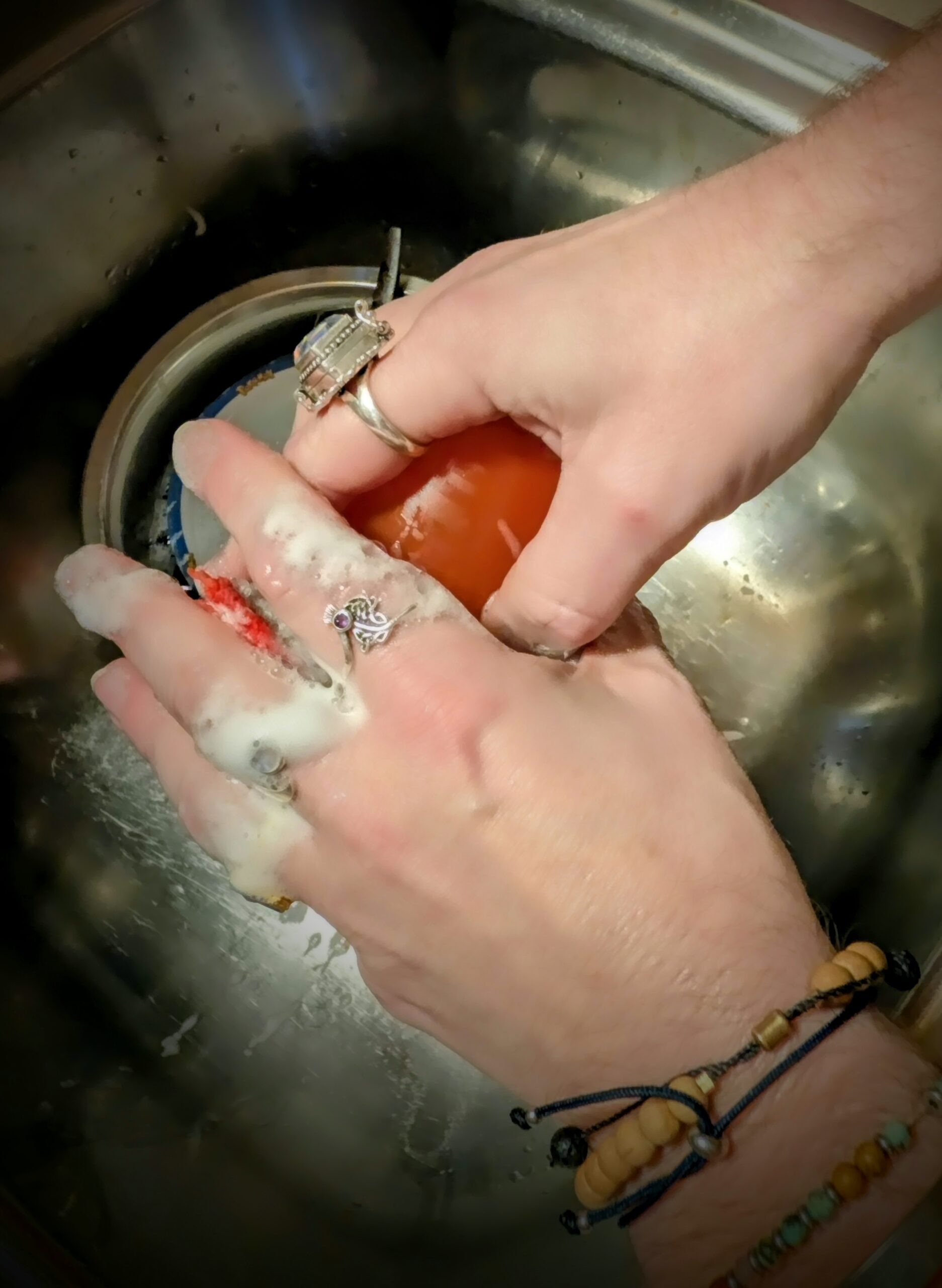
I was doing Z’s dishes when she told me her only regret.
She was in her 90s, living in a senior community. Her family had originally reached out to me, but she was the one who hired me to visit once a week. As she put it, death wasn’t visiting her every night, but it wasn’t far away either. Our visits had the shape most doula visits have when there’s no crisis. Snacks, conversation, the small tasks she could no longer do alone. That afternoon I was at her sink with my hands in soapy water and we were talking about regrets. I’d told Z that when my mother was dying, she said she had no regrets, and I wanted to live my life that way.
Z said the only true regret she had was that she’d never had an orgasm.
I was surprised. She’d been married almost seventy years. She’d had several children. I hadn’t thought about it really, but when she said she hadn’t, I realized I’d just assumed that because she’d had sex, she’d had orgasms. I was very wrong. She’d been taught that sex was for making babies or for her husband’s enjoyment. That was the whole frame. She’d lived inside it her entire married life. Her mother’s advice on the wedding night was to “make it easy for him.”
She told me about a friend of hers who had never married, a woman who used to talk openly about the sexual experiences she was having. Z said she’d spent decades feeling sorry for this friend, certain that the friend was missing out on the joys of family. It was only after her own husband died, and Z started being what she called “more selfish,” that she realized she had been missing out too.
Years later she’d tell me that “pity” had only been the word she had at the time. The real feeling, the one she didn’t have language for, was envy. Envy that her friend felt that at home in her own body. Perhaps even awe.
I felt the catch you feel when something penetrates the whole body at once. All systems paused. I stopped mid-motion with a dripping cup in my hand and turned to her. She laughed and reprimanded me about the water on her floor. I told her she’d shocked me speechless, and grabbed a towel to wipe the floor.
That’s when she said it. The line I now use to introduce myself at every Death Cafe. The line that heads the Dying and Threshold page of my practice. The line I’ve quoted to clients, to caregivers, to friends, to anyone who’s needed to hear it. She said it with nonchalance, as if it were obvious. And once I processed her words, it was.
Sex and death are two places we should have the most autonomy, and they’re often the two places where our voices get the most lost.
I was still on the floor with the towel.
My mouth got ahead of my brain. From down there, drying her kitchen tile, I asked her if she wanted to have an orgasm. I told her she could still give herself one. I don’t remember deciding to ask. I remember a half-formed thought moving through me that went something like: if that’s your only regret, that can be cured. The question was out before I’d worked through whether it was the right question.
It was the right question. She wanted to know how. I told her some options. The conversation continued.
The next week when I arrived at her apartment, three of her friends were there. They had questions about sex.
A month after that, Z asked me if I’d be willing to host a monthly gathering for the ladies’ group in the events room of the senior community. I said yes. We talked about kink. We talked about the shame women carry into their bodies for entire lifetimes. We took a field trip to a lingerie and sex toy shop, where the staff treated a group of women in their seventies and eighties and nineties with exactly the kind of respect Z had spent most of her life not receiving. Z, for her part, was not subtle about her enthusiasm. The other women weren’t far behind.
She didn’t just have that one orgasm. She had one whenever she wanted after that.
When her oldest son got wind of what was happening, he told her she was going to be remembered as a geriatric sex addict. Z’s response, delivered with her signature dry humor coated in a heavy undertone of pragmatism, was that she wanted to be remembered as a woman who embraced herself and her life all the way to the very end. She wanted to die knowing she’d encouraged younger generations she loved, and plenty of women she’d never meet, to do the same.
About two months into the gatherings, one participant’s adult daughter started getting worried about what her mother was doing in there. Her mother’s response was to invite her to come. That’s when the shape of what Z had started became visible. The daughter came. Other daughters came. The women in the original group realized, sitting across from their own grown children, how much shame they had passed down without even realizing it. Cultural shame travels quietly through generations of women who never speak the words out loud. They didn’t want to leave another inheritance like that one. Granddaughters started coming. Eventually there was a sons’ and grandsons’ group, because the silence Z had lived inside hadn’t only been done to the women of her family. It had been done to all of them. Sexual embodiment isn’t a women’s issue. It’s a human one. Z understood that before I did.
What everyone learned in those rooms, eventually, is that sex is bigger than orgasm and bigger than two naked bodies. Sex is personal autonomy. It’s owning your own truth and demanding respect for it. It’s giving yourself permission to choose yourself. It’s recognizing that pleasure doesn’t need to be secret or shameful or even embarrassing. Z said, more than once, how ridiculous it was that any of us had ever called that selfish. By the end she was using the word with full air quotes and a raised eyebrow.
When I told her I was adding sexual embodiment work to my practice as a formal pillar, she thought about it for a moment and said, you’re our little Taboo Doula. She named the work. I just kept showing up.
Z had lived almost a century inside a framework that told her she did not have a right to her own pleasure. She had also, by the time I met her, been living for years inside another framework that told her she didn’t have much right to her own decisions anymore. Her adult children were making choices for her about her care, her finances, her future, in the way adult children often do when their parents reach a certain age. The intentions were loving. The effect was that Z, at the end of her life, was being silenced about her death the way younger Z had been silenced about her body. Same silencing, different decades. Both grounded in the same idea, which is that someone else knew better than she did about what was hers to choose.
That’s why the quote does the work it does. The two places we should have the most say are the two places we get heard the least. Not by accident. Both grounded in the same refusal of authority over the self.
Z has passed now. The gatherings outlived her, though they’re not mine to describe further. What I can say is that a woman who never had an orgasm until her 90s spent her last years actively encouraging rooms full of women, and eventually men, to learn what she’d missed and refusing to let them go without it. She didn’t get back what she’d lost. She made sure other people wouldn’t lose the same thing.
The last conversation we had before she died, she told me she now had no regrets. Even better, she said, she’d baptized a Taboo Doula as part of her legacy.
I think about her every time someone tells me they don’t know if they’re allowed to want what they want. I think about her every time a family member talks over a dying person about that dying person’s own care. I think about her every time I’m at someone’s sink, doing their dishes, while they tell me something they’ve never told anyone.
She named me. She named the work. She named the silencing. Her only regret got cured, and then she got to work on everyone else’s.
I’m still working on what she started.
Stay close to the hearth
Writing about death, grief, sex, and the body. Delivered to your inbox.