Sifting Through the Bullshit When You Just Want to Fucking Heal
Weaponized healing spaces and how to recognize them
A friend sent me an article recently that made my blood boil.
It was reporting from The Cut about OneTaste, a neo-tantric organization now facing federal charges. The organization operated for years. It attracted intelligent, curious, seeking people who wanted genuine healing. And it systematically exploited them.
The pattern isn’t unique to OneTaste. Similar reporting from The Guardian has documented the case of Gregorian Bivolaru, leader of an international network of tantric yoga centers, now awaiting trial in France on charges of kidnapping, human trafficking, and rape. There have been documented cases involving Bikram Choudhury, Sri K Pattabhi Jois, and multiple ashram-based yoga schools. Beyond yoga and tantra, similar patterns show up in psychedelic communities, meditation cults, wellness MLMs, coaching programs that expand into personal control, and every corner of the wellness industry where people seek connection and healing.
My blood was boiling. Not because any of this was new to me. I’ve been watching this pattern for years. My blood was boiling because it keeps happening, and because I keep watching legitimate practitioners in my field lose potential clients who’ve been so burned by bad actors they can’t tell the difference anymore.
I want to talk about this with the people who trust my work, because you deserve to know how I see it, and because I think the conversation matters more than my discomfort in having it.
Sexuality is not the problem
Let me start here, because this is the biggest misconception that has been built within the human culture for generations.
Our sexuality is not inherently bad, or troublesome, or dangerous. Experiencing sensuality isn’t a slippery slope to hedonism. Our capacity for pleasure, for connection through our bodies, for erotic experience however that shows up for us, is not a moral failing. It’s part of being human.
And human beings vary. Some of us experience high sexual desire. Some of us experience little or none. Some of us find our deepest sensuality in conversation, in the meeting of minds, in a particular quality of attention from another person. Some of us need physical touch to feel connected. Some of us don’t. Most of us change over time, with age, with life experience, with the specific relationships and contexts we’re in.
None of that variation is something broken that needs to be fixed. All of it is real and valid.
The cultural shaming operates in all directions
Here’s what I’ve noticed. Our culture doesn’t shame one particular kind of sexual expression. It shames all of them, depending on what serves the shaming.
People who don’t want physical touch are told they’re broken. Told to try harder, work through it, get over their aversion. Told they’re withholding, or unavailable, or frigid.
People who crave physical touch are told they’re degenerates. Too much, too hungry, too intense. Told to control themselves. Told their desire is what’s wrong with them. Told they’re embarrassing, or worse, dangerous.
People who know their own yeses and nos are called brazen. Bossy. Difficult. Told they should be more accommodating, less demanding, less definite about what they want. Or they’re told that they only know these things because they must have been abused as children, they couldn’t possibly have been simply supported.
There’s no correct place to stand. Whatever your honest answer is about your own sexuality, culture has a shaming ready for you.
This does something specific to us. It teaches us we can’t trust our own knowing about our own bodies. Because whatever we know is going to be criticized, we learn to defer to whoever seems to have authority about what our sexuality should look like. This is the vulnerability that bad actors exploit.
The specific mechanisms of exploitation
When someone with genuine or claimed spiritual authority offers to help us figure out who our real selves are, our higher purpose, we’re primed to trust them, because we’ve been taught not to trust ourselves. The bad actor doesn’t have to be cartoonishly evil. They just have to be confident.
Three patterns show up over and over:
They try to make sexuality something it isn’t. They insist there’s a correct way to experience desire, a right form of sexuality that makes it transcend you into a spiritual bliss, a specific practice that will unlock what’s real in you. They deny the variation in how humans actually work. If their teaching doesn’t match your experience, the problem is with your experience, not the teaching.
They see people’s needs as opportunities for power and money. This one is often unconscious at first. A teacher enjoys the deference their students give them. Then they require it. Then they build structures that increase their power over students and extract more resources from them. Sometimes the teacher started with good intentions. That doesn’t matter to the people being harmed. The mechanism, once running, runs the same regardless of where it started.
They offer misguided guidance under vaguely understood tenets. Real spiritual traditions have depth. Someone who has read a book, attended one or two workshops, maybe even had a mystical experience once, isn’t automatically qualified to guide others through those states. But confidence often outpaces depth. Teachers fill the gaps in their own understanding with their assumptions and their own needs. What gets transmitted is a shallow version wearing the vocabulary of the real thing.
The mechanism starts closer to home than we think
Here’s something I want to name that gets less attention than the flagrant abuse cases. Many practitioners are operating from unhealed places themselves. They enter the healing professions to heal something in themselves and end up using their practice as their own therapy. The idea is that if they can provide for others what they haven’t yet received, they will become healed in the giving. They provide what they believe they need, or perhaps, what they wish they would be given.
Sometimes this works out fine, and the practitioner does their own healing alongside offering support and stays honest with themselves and their clients about it. Sometimes it doesn’t work that way. The practitioner becomes convinced their own path is the path, and starts projecting their needs and their wounds onto their clients as if these were universal. They mean well. They believe they’re being generous. What they’re actually doing is asking their clients to hold their unfinished business.
I want to say this because I think most of the harm in this field isn’t from caricatured predators. It’s from people whose good intentions outran their own healing.
The other piece I want to name is this. What actually heals the disconnect that’s becoming more and more prevalent in our society, the disconnect from ourselves and from community as a whole, isn’t being handed a road map with promises of a treasure chest at the X. Some people do need a practitioner to give them answers sometimes, and that’s fine. But at the level of the whole modality, what heals is being given permission and space to create your own road map.
In the height of my personal body image issues and submersion in diet culture, I loved a method that gave me a whole road map instead of suggestions and choices. I didn’t want to learn to listen to my body, I was angry with my body, I just wanted to be given a map that would make it behave the way I thought it should. Look the way I thought I needed it to to be able to find happiness. And each one worked for a minute, but none were sustainable, because until I actually reconnected with my own body, and accepted it as a part of me, happiness was going to continue to elude me, and it did. There were healers who helped me see my path to re-connection, some who had been on a similar path themselves, but the process was something that had no road map, because no one had ever been me before. We are each unique, that’s the danger of rules and set regulations for healing and reconnecting with ourselves, we’re the only us that has ever existed. We are each inherently unique in self.
What legitimate practice actually is
I was trained in the Skydancing Tantra lineage. My teachers named that tantra holds a deep responsibility for protecting the energy of everyone involved, not exploiting it. My training taught that legitimate practice returns sovereignty to the practitioner, not away from them.
The core distinction is this: real practice strengthens your capacity to hear your own yes, your own no, your own in-between. It helps you develop the discernment that culture has taught you to give away. Weaponized practice replaces that discernment with the teacher’s authority.
A real teacher creates conditions for you to find your own answers. A bad actor replaces your answers with theirs.
Real practice also honors that you change over time. Just like your self, your sexuality at twenty isn’t your sexuality at forty isn’t your sexuality at seventy. What you desire at the beginning of a relationship isn’t necessarily what you desire ten years in. What feels alive after loss isn’t the same as what felt alive before. Genuine practice makes room for that evolution. Bad practice insists that once you’ve achieved the correct sexual expression, deviation from it is failure. It creates distrust of your own gut instincts by telling you that your discomfort and urge to run is exactly what you need to eliminate, or else you’ve failed.
And self-connection is the point. Whatever brings you closer to knowing yourself, closer to being able to articulate your own truth about your body and your desires, closer to being able to communicate that truth to the people you’re in relationship with, is the actual work. Sex isn’t the goal. Self-connection is.
Tantric Reiki, as I practice it, isn’t about sex
I want to name this directly because I offer Tantric Reiki sessions in my studio, and I want to be clear about what they are and aren’t.
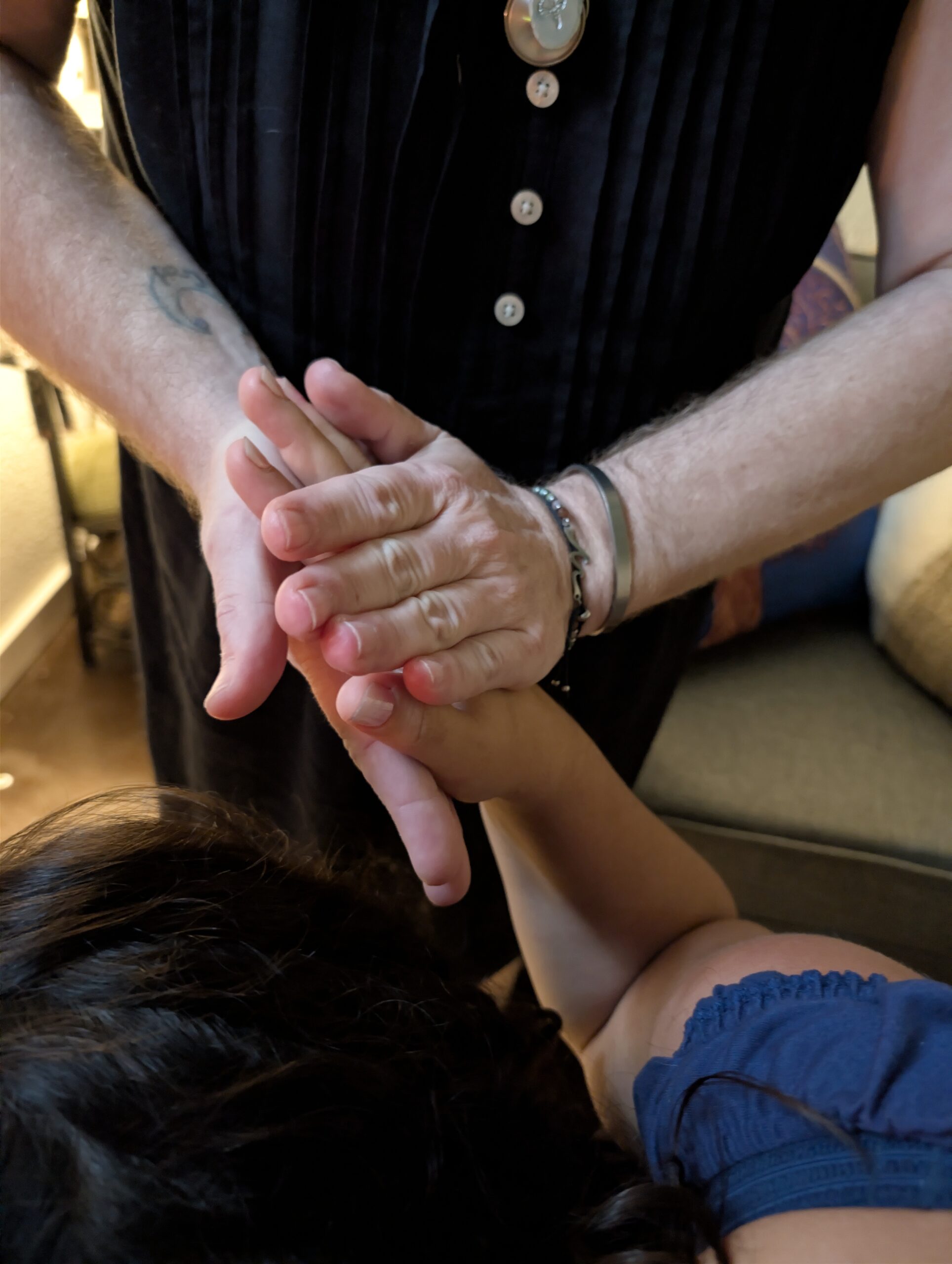
Tantric Reiki is energy work. It might open up sensuality. It might open up truth. It might open up a clog of energy around sexuality and sensuality that has been building since you were a child. But it isn’t about sex. Sessions are clothed. Sessions are primarily non-contact. The work is about the movement of energy, and the primary relationship is between you and yourself, not between you and me.
In a good practice, a good workshop, a good retreat, sex isn’t the focus. Self-connection is. Sensuality might arise. Awareness of your body’s actual answers might arise. Grief for what you’ve been shamed out of might arise. All of that is welcome. But the practice isn’t sex. The practice is you meeting yourself.
What to watch for
If you’re considering healing work of any kind, especially anything that touches sexuality or embodiment, here are things I’d watch for:
Financial patterns that keep escalating. Small purchase leads to larger purchase leads to intensive program leads to lifestyle-dominating commitment. Legitimate practice has transparent pricing and doesn’t require ongoing escalation.
Isolation from your existing support systems. If a teacher or community suggests your family, your friends, your therapist, or your other communities don’t understand and you should distance yourself from them, that’s a red flag.
Consent that gets murky. Watch for touch that wasn’t explicitly discussed. Watch for practices you weren’t told about in advance. Watch for pressure to participate in things you have hesitation about, framed as your resistance being what needs to be worked through.
A teacher positioned as having answers you don’t. Real teachers help you develop your own discernment. Bad actors position themselves as the source of truth you need to access through them.
Confidence without depth. If you can’t tell where a teaching came from, what lineage transmits it, what the accountability structure is, be careful. Real traditions have infrastructure. Bad actors have charisma.
The feeling that questioning is disloyalty. Legitimate communities welcome questions. Cult-adjacent operations frame questioning as betrayal.
The invitation that isn’t a retreat
Here’s what I want you to know.
The seeking you’re doing is real. The desire for genuine connection with yourself and with others is real. The need for spaces where you can talk about your body, your sexuality, your grief, your longing, your unresolved questions is real. And it’s worth protecting.
Don’t let bad actors keep you from work that could actually serve you. But also, don’t let anyone convince you that you need to surrender your sovereignty to access what you’re seeking. Anyone who tells you that giving up your own knowing is the path to freedom is teaching you the opposite of what real practice teaches.
If you’ve been to a space that harmed you, that wasn’t your fault. The vulnerability that was exploited was created by a culture that taught you not to trust yourself. The exploiter didn’t create your seeking. They just recognized it and moved to profit from it.
If you’re considering a practitioner, a workshop, a retreat, a healing modality, take your time. Ask questions. Talk to people who’ve done the work. Notice how you feel when you get answers. Notice whether the answers give you more capacity to trust yourself, or less.
And if you want to have a conversation about what real embodied practice looks like, or want to see what a space that doesn’t weaponize your seeking might feel like, my door is open.
You have every right to explore who you are, sexually, sensually, spiritually, and however else you define it. You have every right to change your mind. You have every right to say no to any of this. And you have every right to say yes to work that treats you as the sovereign, capable human being you already are.
Stay close to the hearth
Writing about death, grief, sex, and the body. Delivered to your inbox.